The Launch Is an Operational Moment, Not a Button Press
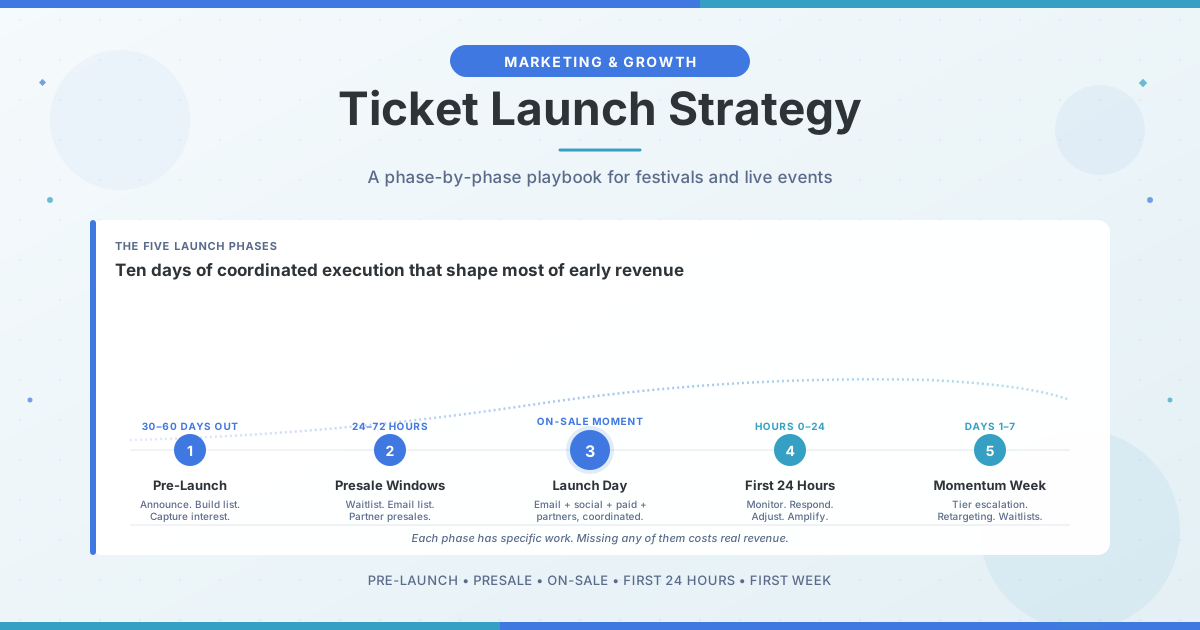
Most of an event's early revenue is shaped by what happens in the ten days around on-sale. The announcement. The presale sequence. The launch moment itself. The first 24 hours. The first week. Each of these is a distinct phase with specific work that determines how much momentum your event carries into its broader sales cycle.
Organizers who treat ticket launch as "we flip the switch and tickets are available" leave significant revenue unrealized. Organizers who treat it as a structured operational sequence with specific phases and tactics consistently outperform on early sales, press coverage, and full-cycle revenue.
This guide covers the practical launch sequence we see work across festivals, concerts, and live events: pre-launch positioning, presale design, the on-sale moment, and first-week momentum. For pricing strategy specifically (break-even math, tier architecture, dynamic pricing mechanics), see our companion guide on how to price event tickets. This post focuses on the launch execution itself.
Phase 1: Pre-Launch (30–60 Days Out)
The work that happens before tickets go on sale determines how much demand is waiting for you on launch day. Most organizers underinvest here, then wonder why their on-sale underperformed. Pre-launch is where momentum is built.
Core pre-launch work:
- Announce the event before tickets are live. Save-the-date, date reveal, venue reveal, artist/speaker announcements spread over weeks. Each announcement creates a new content moment, a new reason for press coverage, and a new email opportunity. Announcing date, venue, and lineup simultaneously wastes three distinct marketing beats.
- Build a pre-launch landing page. Big Tickets supports pre-launch interest capture, so organizers can have a live page collecting email signups and generating excitement before tickets are available. This page should clearly communicate the event, tease the date, and capture emails for presale and on-sale notifications.
- Grow your email list. Every day in the pre-launch window is a day to build the audience that will actually buy on day one. Run social content driving to the signup page. Partner with venues, artists, and sponsors for cross-promotion. Last year's attendee list is your most valuable launch asset.
- Set up your tracking infrastructure. Meta Pixel, conversion events, and UTM parameters should be in place and tested before announcement, not set up the week before on-sale. You want attribution from the first visitor, not the first purchase.
- Coordinate with partners. Sponsors, venues, artists, creators, and media partners all have their own audiences. Brief them on your timeline and give them content they can share. A coordinated launch across 10 partner channels moves more tickets than a louder launch on your channel alone.
For a deeper look at how to build and execute marketing throughout the full sales cycle, see our guide to boosting ticket sales.
Phase 2: Presale Design
A well-designed presale is the most effective conversion tool in a ticket launch. Presales give your most engaged audiences access before the general public, reward past attendees, build fan-club relationships, and convert a portion of demand before you ever open public sales.
Presale structures we commonly see work:
- Email list presale. Everyone on your pre-launch signup list gets a 24–48 hour window to buy before public on-sale. Rewards early engagement and converts your warmest audience first.
- Past attendee presale. Everyone who purchased tickets to a prior year's event gets early access. Especially effective for recurring festivals and concert series; signals loyalty and retention value.
- Artist or sponsor presale. Performing artists, featured speakers, or major sponsors get access codes to distribute to their audiences. Drives amplification through partner channels.
- Public waitlist presale. Anyone can join the waitlist during pre-launch; waitlist members get a presale access window before public on-sale. Expands the presale audience while still creating an earned-access dynamic.
- Credit card or fan club presale. For larger events with financial partners or dedicated fan communities, a dedicated presale window creates real value for those relationships.
Big Tickets supports full waitlist functionality with queue management, automated notifications, and buyer auto-conversion when access opens. Set up a pre-launch waitlist, let excitement build during announcement, then open presale access to waitlist members at a specific time. The waitlist becomes both a marketing list and a conversion mechanism.
A common question: how long should the presale window be? For most events, 24–72 hours works well. Long enough to let engaged buyers act without rushing; short enough that urgency stays intact. Multi-layered presales (artist presale → email list presale → waitlist presale → public on-sale) can stretch over a week, with each tier creating its own moment.
Phase 3: The On-Sale Moment
Public on-sale is the most visible moment in your launch sequence. Done well, it creates a concentrated rush of sales, press attention, and social conversation. Done badly, it becomes a point of friction that damages the rest of the launch.
The on-sale checklist, starting 72 hours before public on-sale:
- Final ticket page review. Does every tier display correctly? Is pricing accurate? Are tier descriptions clear? Is ADA seating properly designated? Does the mobile flow work end-to-end?
- Payment processor confirmation. Confirm with your processor that sales are expected and that temporary volume won't trigger fraud holds on your account. For large launches, brief the processor in advance.
- Server and checkout readiness. Confirm that ticket page infrastructure can handle expected traffic. For high-anticipation launches, stress test in advance.
- Time zone clarity. Announce on-sale in a specific time zone (e.g., "10:00 AM ET") and state it explicitly everywhere. Don't say "noon Tuesday" and assume buyers will figure out which noon. This is one of the most common early-bird mistakes carried into general on-sales.
- Email scheduled to send at on-sale moment. The email that tells your list "tickets are live" should drop at exactly the on-sale moment, not five minutes later. Your warmest audience converts at the highest rates in the first hour.
- Social post and paid ads ready. Organic social announcement scheduled. Paid ads configured to activate at on-sale time with creative pointing directly to the ticket page.
- Partners briefed on timing. Every partner (sponsors, artists, creators, venues) knows exactly when on-sale goes live and has their promotional content ready.
- Support staff available. Someone monitoring customer service, social mentions, and any technical issues during the first hours. On-sale problems compound fast if no one's watching.
The on-sale moment itself is a 15-minute coordinated action across email, social, paid, and partner channels. Organizers who treat it as one integrated marketing moment consistently outperform those who treat it as separate channel pushes.
Phase 4: The First 24 Hours
The first day of on-sale sets the tone for the entire launch. It's when your highest-intent buyers convert, when press coverage hits, and when your dynamic pricing tiers start moving.
What to prioritize in the first 24 hours:
- Monitor sell-through velocity. How are each of your pricing tiers moving? Is VIP selling faster than expected? Is GA lagging? Early signals matter because they inform the tier adjustments you'll make over the first week.
- Track attribution in real time. Which channels are driving the most conversions? If email is outperforming paid social, you may want to increase email frequency. If one creator partner is driving outsized traffic, that's a signal to deepen that relationship.
- Respond to customer service volume quickly. Every launch generates some friction: payment issues, confusion about tiers, accessibility questions, refund requests. Fast response preserves goodwill and prevents small issues from escalating publicly on social media.
- Amplify milestones. "Day one presale sold out in 90 minutes." "VIP tickets 60% gone." These announcements create momentum for buyers who hadn't yet decided. Use specific numbers where you have them.
- Restart paid ads if needed. Some paid campaigns underperform at launch because the algorithm hasn't optimized. Others overperform and need budget increases. Review and adjust based on actual data, not pre-launch assumptions.
Phase 5: The First Week
After the initial rush, the launch shifts from acquisition mode to momentum mode. The goal shifts from "how many tickets sold today?" to "how do we keep velocity up before the predictable mid-cycle lull?"
Effective first-week tactics:
- Tier escalation as planned. If your on-sale launched with early-bird or first-tier pricing, the natural shift to the next pricing tier creates a specific deadline that drives a secondary conversion surge. For a deeper look at tier architecture, see our pricing guide.
- Scarcity signaling where honest. "Only 200 VIP tickets remaining" works when true. Made-up scarcity erodes trust fast and gets noticed by attentive buyers.
- User-generated content seeding. Buyers who purchased in the first 24 hours are often your most engaged fans. Encourage them to share (with branded graphics or hashtag campaigns), and amplify the best social posts.
- Media follow-up. If on-sale coverage was strong, follow up with outlets that didn't cover and use day-one data as the news hook: "Event sells X% of inventory in first 48 hours."
- Retargeting audiences activated. By day 3–4, Meta Pixel has enough data to run effective retargeting to ticket page visitors who didn't convert. Launch retargeting campaigns that address specific objections (pricing, timing, access level).
- First waitlist activation. If any sold-out tiers have waitlists, start working those lists. Some buyers will convert to other tiers; others just want to know when (if) more inventory becomes available.
Common Launch Mistakes
A few patterns we see repeatedly across launches that underperform:
- Announcing on-sale the same day as the event reveal. Combining announcement and on-sale wastes the pre-launch window entirely. You need the gap between announcement and on-sale to build demand.
- Generic email to a list that hasn't been warmed up. If the first email your list gets about the event is "buy tickets now," conversion will disappoint. Announcement, teaser, save-the-date, and presale sequence all prepare the audience to act.
- No mobile optimization. The majority of launch-day traffic will be mobile. If the ticket page is hard to navigate on a phone, checkout conversion suffers. Test it on a phone before launch, not on a desktop.
- Underestimating customer service volume. Launches generate 5–10× normal support volume in the first 48 hours. Plan staffing accordingly; a single unanswered Instagram DM can turn into a public complaint thread fast.
- Not coordinating across channels. Email goes out at 10:00 AM, social posts at 10:30 AM, paid ads start at 11:00 AM, artist posts at noon. Each channel is working a separate moment instead of one unified launch.
- Skipping the presale. Public-only on-sales leave money on the table by not rewarding engaged audiences first. Presales work even when they're simple (a 24-hour email list early access is enough).
- Ignoring waitlists on sold-out tiers. A waitlist captures demand for inventory you may have later through cancellations, upgrades, or tier expansion. Not having one means losing those buyers entirely.
Launch Patterns by Event Type
A few event-type patterns we see consistently:
- Festivals. Typically benefit from longer pre-launch windows (45–60 days) because of lineup reveal pacing and multi-day ticket complexity. Presale sequencing is especially valuable for festivals with returning attendees and dedicated fan communities.
- Concerts and tours. Often run faster launch cycles (14–30 days) with tighter artist presale coordination. Fan club and credit card presales are standard. On-sale itself tends to be a single concentrated moment rather than a phased rollout.
- Fairs and recurring regional events. Benefit from past-attendee presales and slower dynamic pricing progressions. Audience is often more price-sensitive and deadline-driven.
- Conferences. Longest pre-launch windows (60–90 days) because buyers often need budget approval. Early-bird pricing works especially well because buyer organizations often have expensing deadlines aligned with specific dates.
- Comedy and theater. Shorter windows, simpler pricing, often just GA and VIP. Fewer tiers means less dynamic pricing complexity but more emphasis on the launch moment itself.
Every event is different, but matching your launch sequence to the rhythm of your specific event type tends to outperform applying a generic playbook.
A Structured Launch Is a Multiplier
The events that launch well aren't the ones with the biggest budgets. They're the ones that treat launch as a specific operational discipline with distinct phases, clear sequencing, and coordinated execution. Pre-launch builds the audience. Presale converts your warmest buyers. The on-sale moment generates attention and revenue concentrated in time. The first week carries momentum into the rest of the sales cycle.
Each phase has specific work. Missing any of them costs real revenue. Doing all of them well compounds, and you carry that momentum for weeks.
For pricing strategy to go with this launch playbook, see how to price event tickets. For the full sales cycle beyond launch, see how to boost ticket sales. For measuring whether it's all working, see how to measure event marketing ROI. Launch is one phase; the system around it is how you turn a successful launch into a successful event.
Ready to Run a Smarter Event?
Big Tickets helps festivals, fairs, concerts, and live events sell more tickets, streamline operations, and deliver a better attendee experience. No subscriptions, no setup fees.
Request a Demo