Conference Marketing Is a Different Game
Conference audiences don't behave like festival audiences. They do more research before registering. They care more about who else is attending. They respond to thought leadership and speaker credentials more than to hype. And they live on different platforms, which means a social media strategy built for festivals will underperform badly when applied to conferences.
This guide covers what actually works for conference marketing in 2026. Not generic "post consistent content" advice, but platform-specific tactics calibrated to where conference audiences actually spend time and what persuades them to register.
Start with Channel Prioritization, Not Platform Presence
The first mistake most conference organizers make is treating all social platforms equally. Spreading effort across five platforms almost always underperforms concentrating it on the two that match your audience. A platform where you're half-present signals a half-committed conference.
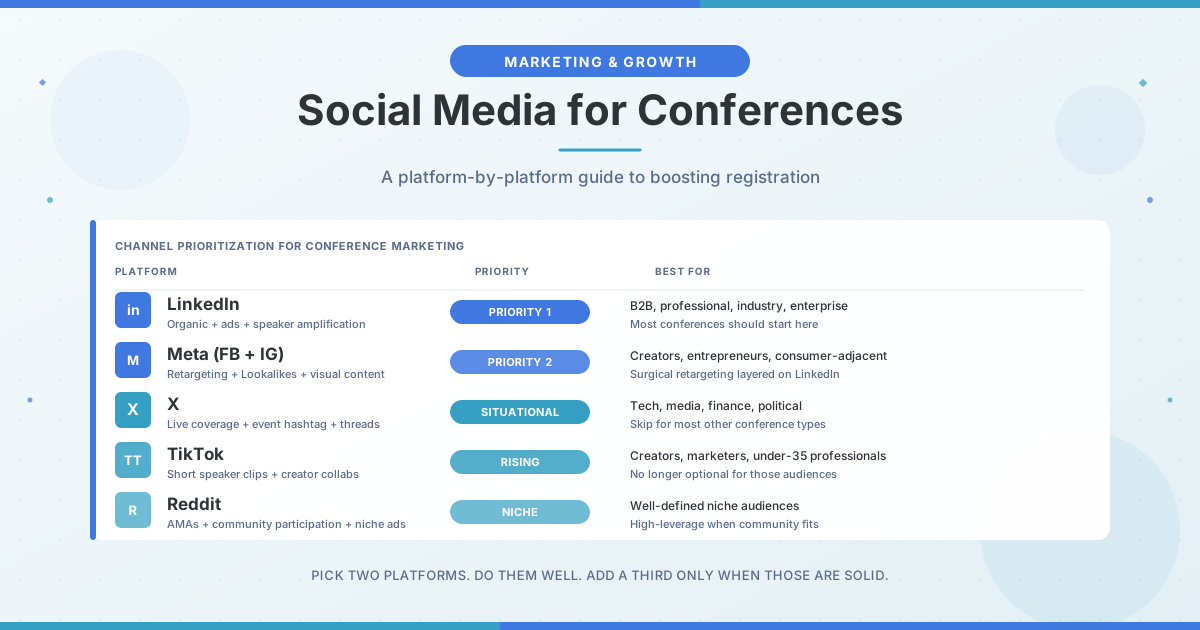
For most conferences, prioritization looks roughly like this:
- LinkedIn is usually priority one, especially for B2B, professional development, industry, and enterprise conferences. This is where your audience makes decisions about professional events.
- Meta (Facebook + Instagram) is priority two for most conference types, stronger when your audience skews toward creators, entrepreneurs, or consumer-adjacent industries.
- X still matters for tech, media, finance, and political conferences where real-time industry conversation happens on the platform.
- TikTok is a rising priority for conferences targeting creators, marketers, Gen Z professionals, or any audience under 35.
- Reddit matters when your conference has a defined niche audience with an active subreddit. Often underused but high-leverage when the community fit is right.
Pick two platforms to do well before adding a third. You'll produce higher-quality content, see better performance data, and stop spreading your team thin across channels that don't move registrations.
LinkedIn: The Most Underused Channel in Conference Marketing
LinkedIn is the most important social platform for most conferences, and most conference teams use it badly. They post generic announcements, get low engagement, and conclude that LinkedIn "doesn't work." What doesn't work is corporate copy-paste content. What does work is treating LinkedIn as a personal network where real people share real insights.
A conference-focused LinkedIn strategy has four layers:
- Organic company page posts. Announcements, speaker reveals, agenda updates, attendee spotlights. Keep them punchy and mobile-first. Company page posts alone reach only a fraction of followers; they're infrastructure, not the main channel.
- Personal posts from the conference organizer or director. Personal LinkedIn profiles reach dramatically further than company pages. A post from the conference director announcing a speaker, sharing a behind-the-scenes moment, or explaining why a session matters will routinely outperform the same post from the company page by 5 to 20 times.
- Speaker amplification. Every speaker you book has a LinkedIn network, often a valuable one. Make it easy for them to share: pre-written post templates, branded quote cards, session promotional graphics. A single LinkedIn post from a well-known speaker often drives more registrations than a week of paid ads.
- LinkedIn ads with job/industry/company targeting. For B2B conferences, LinkedIn's targeting is unmatched. You can reach exactly the job titles, company sizes, industries, and seniority levels you want to attend. CPCs are higher than Meta, but conversion rates on the right audience are significantly higher. Budget accordingly.
LinkedIn ads work best for conferences with a clear professional audience and a ticket price that justifies higher CPCs. If your average registration is $50, LinkedIn ads may not pencil out. If it's $500 or $5,000, they almost always do.
Meta: The Visual Layer and the Retargeting Layer
Meta (Facebook and Instagram) plays a different role for conferences than for festivals. You're less focused on broad awareness campaigns and more focused on retargeting warm audiences, driving ticket page visits from professional communities, and running visual content that makes the event feel real.
Effective uses of Meta for conferences:
- Retargeting website visitors and past registrants. Anyone who visited your registration page but didn't convert is prime retargeting territory. Same for attendees of past conferences who haven't registered yet this year.
- Lookalike Audiences based on past attendees. Upload your past registration list, let Meta find similar professionals, and use that audience for paid campaigns.
- Instagram Stories and Reels for behind-the-scenes content. Quick video content (venue walkthroughs, speaker prep, team moments) humanizes the conference and converts visually-driven audiences.
- Meta ads during the conference itself. Live coverage content running as paid ads during the event drives next-year signups and early-bird registrations while excitement is high.
Don't try to make Meta carry your entire conference marketing strategy the way you might for a consumer festival. Use it surgically, layered on top of LinkedIn. For a deeper look at how to run Meta ad campaigns effectively, see our guide to Meta ads for events.
X: Real-Time Industry Conversation
X isn't what it was in 2017, but for certain conference types it remains valuable, specifically tech, media, finance, political, and journalism conferences where real-time industry conversation still happens on the platform.
What works on X for conferences:
- An active event hashtag. One clean, short, memorable hashtag that attendees, speakers, and organizers all use. Set it early, promote it everywhere, and use it consistently.
- Real-time live coverage during the event. Quotable speaker moments, session highlights, hallway takeaways. This builds FOMO for people who didn't attend and becomes valuable next-year content.
- Speaker threads. For tech and finance conferences especially, asking speakers to post substantive threads in the weeks leading up to the event drives both attention and perceived quality.
- Engagement with adjacent conversations. Replying to and amplifying industry conversation happening on your topic (not just broadcasting your own content) is how X accounts build real reach.
For conferences outside the tech/media/politics/finance space, X is usually not worth significant investment. Be honest about whether your audience is there before committing resources.
TikTok: The Rising Channel for Creator and Younger Audiences
If your conference audience includes creators, marketers, entrepreneurs, or professionals under 35, TikTok is no longer optional. It's become a serious professional content platform for certain industries, and conference organizers who ignore it are missing meaningful reach.
What works on TikTok for conferences:
- Short speaker clips (30–60 seconds). Pull the single sharpest insight from a session or interview. Good TikTok content is a single idea delivered crisply, not a trailer.
- Creator and speaker collaborations. Speakers who are active on TikTok have pre-built audiences. Partner with them to create conference-specific content in their voice.
- Behind-the-scenes and BTS-style content. Setup, logistics, speaker green rooms, moments that feel real. TikTok rewards authenticity over polish.
- Paid TikTok ads. Can work well for the right audiences, though CPCs and targeting options are different from Meta. Test carefully before scaling.
TikTok is not a fit for every conference. If your audience is primarily 50+ executives in traditional industries, skip it and concentrate on LinkedIn. But if there's any creator, marketer, or younger professional angle, allocate real attention.
Reddit: Niche but Powerful for the Right Audience
Reddit is often the single highest-converting social channel for conferences with a well-defined niche audience, when it's approached correctly. The mistake most organizers make is treating Reddit like Facebook: posting promotional content and expecting engagement. That approach gets you banned from subreddits fast.
What actually works on Reddit:
- Participate in the community long before you promote. Contribute genuine value (answers, insights, resources) to the subreddits your audience frequents. This takes months, not weeks.
- Work with moderators directly. Many niche subreddits have specific rules for event promotion. A clean request to moderators, with proof of community value, often leads to sanctioned AMAs or promoted posts.
- Host AMAs (Ask Me Anything) with speakers. A well-organized AMA with a high-profile speaker can drive hundreds of registrations from one thread, especially for tech, gaming, or creator-focused conferences.
- Paid Reddit ads to specific subreddit audiences. Less common but surprisingly effective for niche professional audiences. Reddit's audience targeting is based on subreddit interests, which maps closely to professional identity.
Speaker Amplification: The Highest-Leverage Play in Conference Marketing
This is worth its own section because most conferences underinvest in it dramatically. Your speaker lineup is one of your highest-leverage marketing assets, and most of the reach they could drive never materializes because organizers don't make it easy for speakers to share.
Build a speaker amplification kit that includes:
- Pre-written LinkedIn and X post templates the speaker can copy and personalize
- Branded graphics featuring the speaker, session title, and conference hashtag, sized for LinkedIn, Instagram, and X
- A unique speaker referral link (often powered by the same affiliate tracking tools you'd use for partners) so you can measure which speakers are actually driving registrations
- Clear timing guidance: when to announce their session, when to share content, when to remind their network as the conference approaches
- Recognition for top-performing speakers: share the data, show them their impact, and they'll do it again next year
Even speakers with modest followings often drive outsized registrations because their audiences overlap with your target market with unusual precision. A keynote speaker with 10,000 engaged LinkedIn followers in your industry is often a better acquisition channel than $10,000 in paid ads.
Hashtag Strategy
A conference hashtag is simple but underused infrastructure. Done well, it creates a real-time conversation that attendees, speakers, and adjacent audiences can all find. Done badly, it fragments into three variants and nobody can follow anything.
Rules for conference hashtags:
- One hashtag, consistent across all years (e.g., #YourConference2026 is fine, but tie it to an evergreen core)
- Short. 15 characters or less if possible. Memorable. Easy to type on mobile.
- Use it everywhere: email signatures, signage, speaker briefings, session slides, social bios, Slack
- Assign a team member to monitor and engage with the hashtag throughout the event
- After the event, compile the best posts into a recap that feeds next year's marketing
The Registration Flow Matters as Much as the Social
Social drives traffic, but the registration page itself converts or kills the deal. Most conference registration flows leak significant revenue through friction that social drives exposed faster, not covered.
What a well-designed conference registration flow includes:
- Clear ticket-tier visibility. Early-bird, group discounts, and VIP options should be obvious before the buyer clicks through checkout.
- Session-level registration if relevant. For multi-track conferences, allowing attendees to pre-select sessions during registration both improves their experience and gives you inventory-planning data.
- Fast mobile checkout. LinkedIn and Meta traffic arrives overwhelmingly on mobile. Slow, multi-step checkouts hemorrhage registrations.
- On-site session check-in that works. When your attendees arrive, the experience should match the social media promise. Big Tickets' Eventpro scanning app supports session-level check-in and badge-driven access control for multi-day, multi-track conferences, so attendees move through the event without bottlenecks.
For a deeper look at Big Tickets' conference-specific capabilities, see our conference management software page.
The Short Version
Prioritize LinkedIn for most conferences. Use Meta for retargeting and Lookalikes rather than cold reach. Commit to X and TikTok only when your audience is actually there. Treat Reddit as a niche channel that rewards real community participation. Build a speaker amplification kit and make it easy for your lineup to share. Pick one hashtag and use it everywhere. And make sure the registration flow your social media is pointing to actually converts.
Done well, social media is one of the most effective ways to drive conference registration. But the conferences that fill their halls are the ones that treat social as a disciplined set of channel-specific plays, not as a single "social media strategy" applied equally everywhere.
Ready to Run a Smarter Event?
Big Tickets helps festivals, fairs, concerts, and live events sell more tickets, streamline operations, and deliver a better attendee experience. No subscriptions, no setup fees.
Request a Demo